

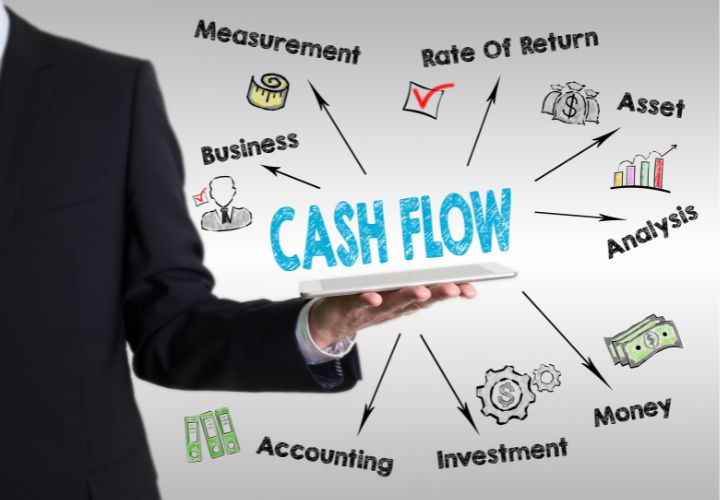
Why Understanding Business Cash Flow Matters
Every business survives on movement of money. When money enters the company, things run smoothly. When money gets stuck or leaves too fast, problems begin. This simple movement of money is what experts call business cash flow. A company may show profits on paper, but if it does not have real cash available when needed, it can still fall into trouble. Many businesses close not because they lack customers, but because they fail to understand how money flows in and out daily.
This article explains what is business cash flow in a clear and simple way. You will also learn how to create a practical cash flow projection, why it is important, and how it helps businesses avoid financial stress. Everything is written for beginners, international readers, and business owners who want a complete understanding of this topic.
What Is Business Cash Flow?
Business cash flow means the total amount of money going in and out of a business over a specific period. It includes every cash-related activity such as receiving payments from customers, paying suppliers, buying inventory, paying salaries, and managing operational costs.
When more money enters the business compared to what goes out, it is called positive cash flow. When more money leaves than comes in, it becomes negative cash flow. A business must monitor its cash flow constantly because it helps owners understand financial health faster than profit statements.
Here is a simple example:
A shop owner sells goods worth 10,000 dollars today but receives the payment after 30 days. On the same day, he must pay 6,000 dollars to suppliers. Profit may look good, but cash is missing. This is where most new businesses get confused between profit and cash flow. Cash flow deals with real money available in hand, not on paper.
- Cash coming from sales and customer payments
- Cash leaving for supplier payments
- Cash used for salaries and rent
- Cash kept for emergencies
- Cash used for equipment and inventory
Understanding what is business cash flow helps owners track the present and plan for the future.
Why Cash Flow Is More Important Than Profit
Profit tells you what you earned. Cash flow tells you whether you can survive. Many profitable companies shut down because they ran out of usable cash. Cash is the fuel that keeps a business running daily.
Here are some reasons why cash flow is more important:
- Cash flow pays your bills, not profit numbers
- Strong cash flow helps you handle slow months
- It gives confidence for growth and expansion
- Positive cash flow builds investor trust
- It protects the company during economic fluctuations
When you understand business cash flow, you can negotiate better, control expenses, plan inventory, and make stronger financial decisions.
Types of Business Cash Flow
Cash flow comes from different activities inside a business. Knowing each type helps you monitor performance more accurately.
- Operating Cash Flow: Money generated through daily activities like sales and services
- Investing Cash Flow: Money spent or received from investments in equipment or assets
- Financing Cash Flow: Money received from loans or money paid back to lenders
- Free Cash Flow: Cash remaining after operating expenses and capital expenses
- Net Cash Flow: Final difference between total cash in and total cash out
Operating cash flow is the most important because it reflects how well your core business is performing.
Common Cash Flow Problems That Businesses Face
Many businesses face cash flow issues because they do not plan ahead. These issues come from delays, overspending, and poor management.
- Late customer payments
- High monthly expenses
- Too much inventory stuck in stock
- No emergency reserves
- Weak tracking of incoming and outgoing cash
When businesses do not understand business cash flow, they often borrow money unnecessarily. This creates more pressure and reduces profit margins. Identifying these problems early helps prevent financial damage.
What Is Cash Flow Projection?
A cash flow projection is an estimate of how much cash your business will receive and spend in the future. It helps predict shortages or surpluses before they happen. This allows owners to prepare, adjust budgets, delay expenses, or accelerate income.
A projection typically covers 12 months, but some businesses prepare weekly or monthly projections. The goal is to plan ahead and avoid surprises.
- Predict future income based on sales and contracts
- Estimate future expenses like rent, payroll, and inventory
- Protect the business from sudden cash shortages
- Support decision-making for investments
- Help in loan approval by showing financial preparedness
Every growing business must master cash flow projection because it acts like a roadmap for financial planning.
Why Cash Flow Projection Is Critical for Business Success
A projection gives you control. When you know how much cash you will have next month or next quarter, you can make confident business decisions. If the projection shows a shortage, you can prepare in advance and avoid panic.
- You avoid running out of cash
- You manage slow months better
- You reduce financial stress
- You plan inventory and hiring carefully
- You make smarter investment decisions
Business owners who regularly prepare a cash flow projection have higher survival rates because they are always ahead of financial challenges.
How to Create a Simple Cash Flow Projection
Creating a cash flow projection is easier than most people think. You only need three main components: cash inflow, cash outflow, and opening balance. Once you track these correctly, projections become simple and predictable.
- List all expected sources of income
- List all expected expenses
- Add one-time expenses like repairs or equipment
- Calculate net cash flow for each month
- Carry over the balance for the next month
This gives you a monthly forecast that shows how much cash your business will have. Many businesses use spreadsheets, accounting software, or online templates. The important part is keeping data updated and realistic.
Examples of Cash Inflows and Outflows for Projection
To build an accurate projection, you must understand what counts as cash inflow and outflow.
Cash Inflows may include:
- Customer payments
- Online sales
- Subscription income
- Loan funds received
- Investment income
Cash Outflows may include:
- Rent and utilities
- Supplier payments
- Salaries and wages
- Loan repayments
- Inventory purchases
Grouping these categories makes your business cash flow easier to manage.
How Cash Flow Projection Helps Different Types of Businesses
Different businesses have different cash patterns. That is why a cash flow projection is not the same for all. Here are some examples:
- Retail stores: Must plan for inventory changes and seasonal sales
- Service businesses: Deal with payment delays from clients
- Startups: Need careful planning to avoid running out of capital
- Ecommerce businesses: Must manage shipping, returns, and online demand
- Subscription businesses: Predictable recurring income makes projections easier
Each business improves its financial strength by forecasting future cash movement.
How to Improve Business Cash Flow Immediately
Improving cash flow is not only about earning more. It is also about managing what you have more wisely.
- Send invoices faster to reduce payment delays
- Offer discounts for early payments
- Reduce unnecessary expenses
- Negotiate better terms with suppliers
- Build an emergency cash reserve
Simple improvements protect your business from sudden financial shocks.
How to Maintain Positive Cash Flow Throughout the Year
Maintaining positive business cash flow requires discipline. A business must regularly review expenses, update projections, and track performance.
- Review cash flow weekly
- Keep strict control on monthly expenses
- Track customer payment behavior
- Use software to automate calculations
- Update projections based on seasonal trends
Consistent monitoring builds financial confidence and long-term stability.
The Relationship Between Business Growth and Cash Flow
Growth requires cash. Whether you want to hire staff, open new branches, increase marketing, or buy equipment, you need available cash. This is why fast-growing businesses often face cash shortages even when they are successful.
- Expansion increases expenses
- Inventory needs rise
- More employees are needed
- Marketing budgets grow
- Operational costs increase
A strong cash flow projection helps businesses grow without facing financial pressure.
Cash Flow vs Profit: The Real Difference
Profit is a long-term indicator of success. Cash flow is a short-term survival tool. Many business owners confuse profit with cash flow and make wrong decisions.
- Profit counts revenue when earned, not received
- Cash flow counts actual money in hand
- Profit shows performance; cash flow shows liquidity
- Profit may be high even when cash is low
- Cash flow determines everyday operational strength
Knowing this difference helps you manage your business more intelligently.
Conclusion: Master Cash Flow to Build a Stronger Business
Understanding what is business cash flow and creating a reliable cash flow projection gives you full control over your business finances. When you track where money comes from and where it goes, you avoid surprises, reduce stress, and build a more secure future. Cash flow management is not a one-time activity. It is an ongoing habit that protects your business from challenges and helps you grow confidently.
A business that manages cash flow well becomes stronger, more stable, and more prepared for opportunities. Make cash flow tracking a priority, and your business will always stay financially healthy.

